Here is the new logo for KD5EUO:

KD5EUO
Radio for Amateurs
Here is the new logo for KD5EUO:
KD5EUO
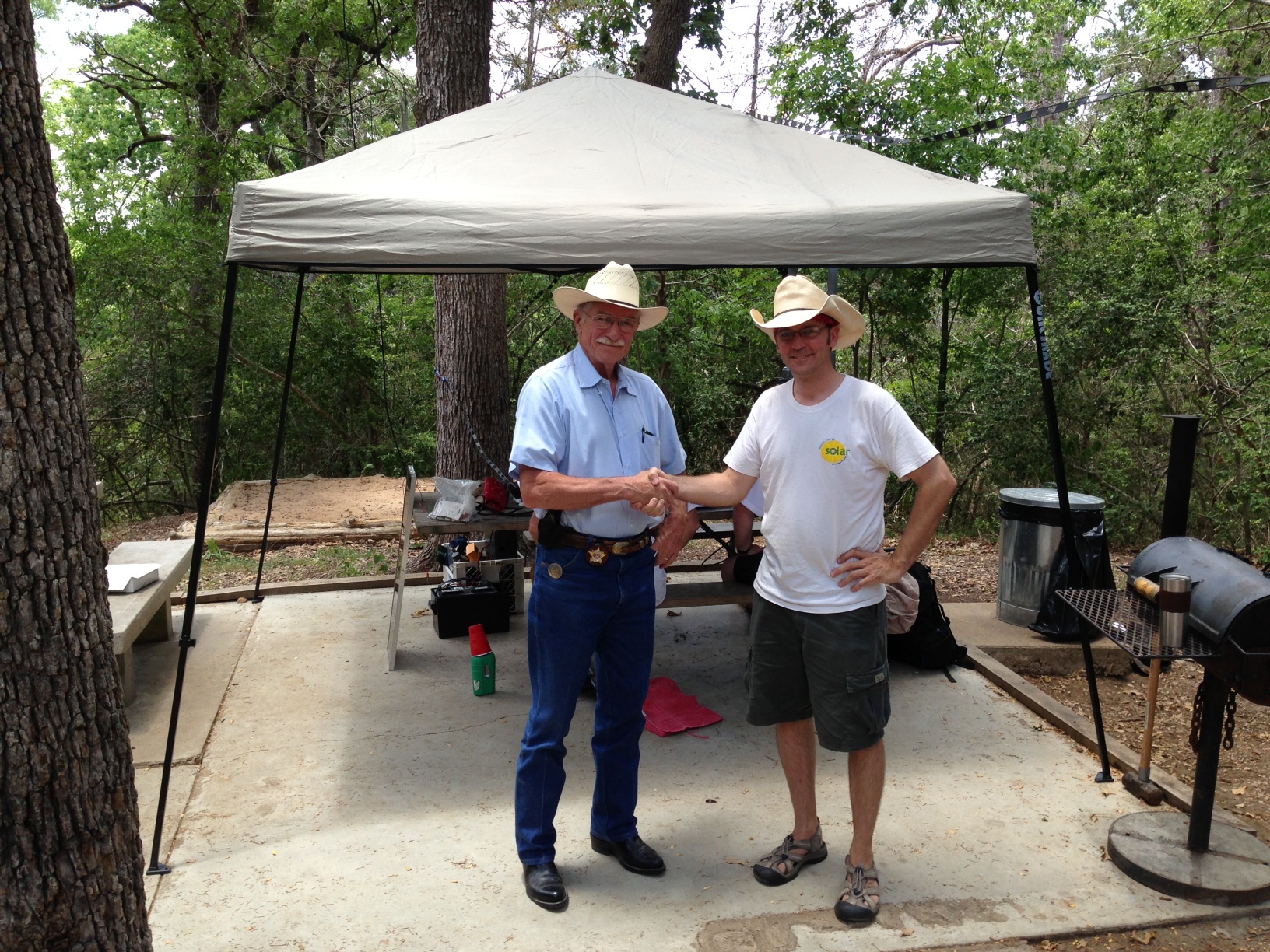
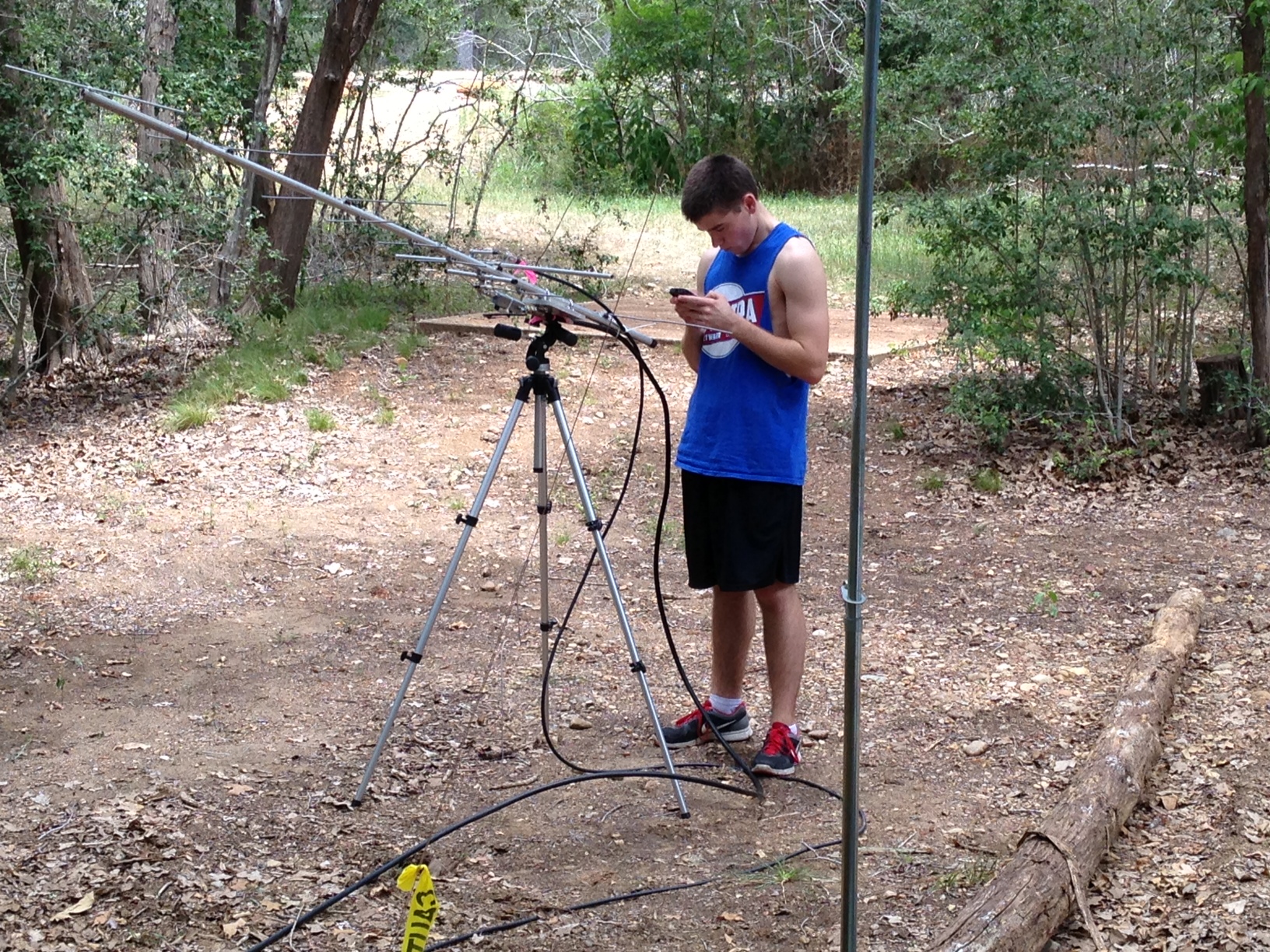
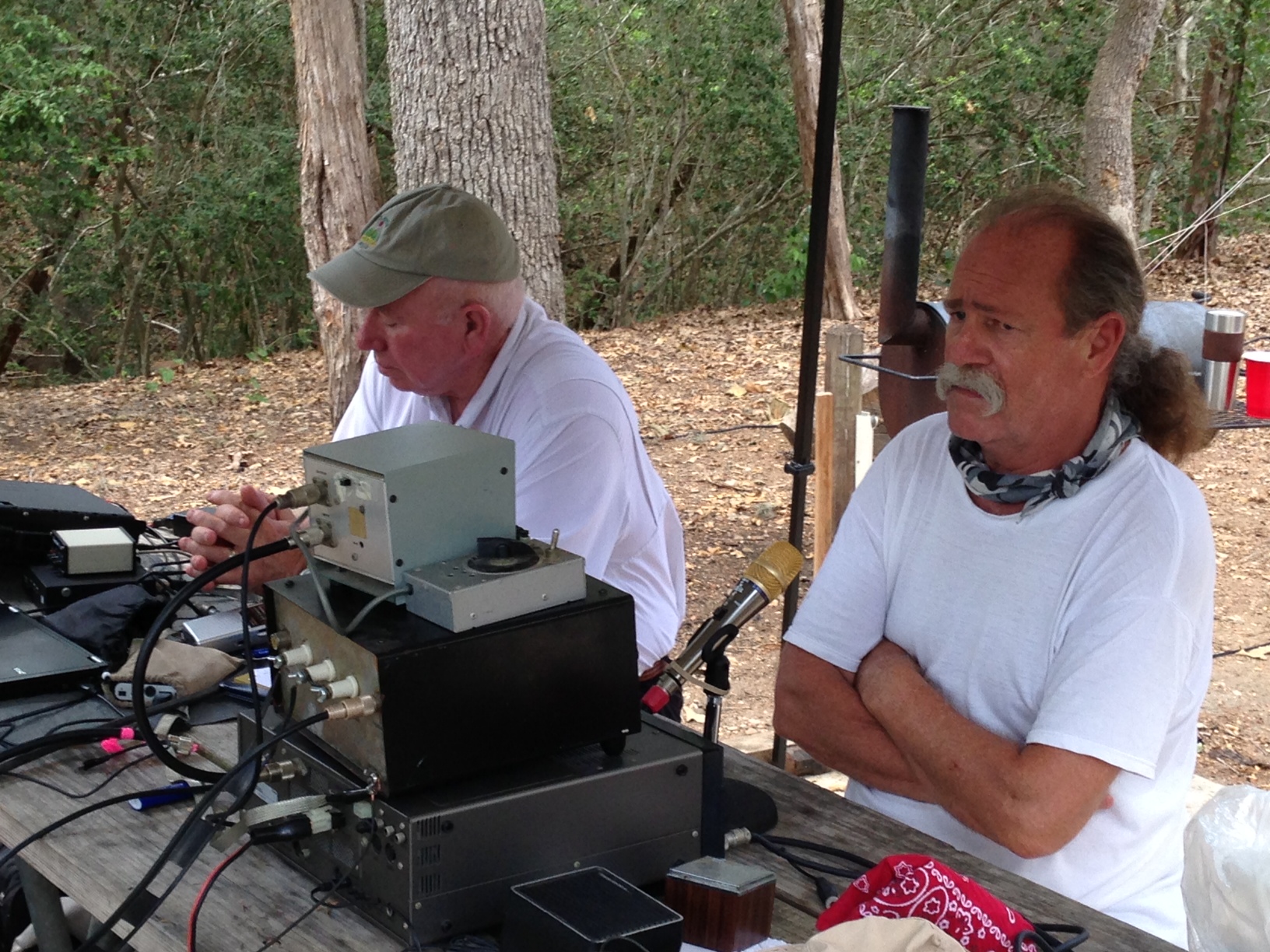
Every year the confederation of loose cannons known as “Los Chupacabraderos” heads into the woods to compete in the ARRL Field Day. Fueled by venison and beer, we like to rough it and operate single transmitter, five watts power (QRP) on battery and solar power only, out in the woods in a secluded campsite in Central Texas. This is known as category “1AB”. In 2013 operating as callsign K5AXW, we were first place in category in the South Texas division, and 7th place in category nationally.
The event was hallmarked with voice, CW, and PSK31 QSOs on HF and six meters, some satellite work, a workshop on how to build a rigid six meter dipole, and a visit from the local constable. A photo & video montage of the event is here, courtesy of KC2QJA’s Flickr page.
This venerable event always occurs the fourth weekend in June and is easily the largest amateur radio contest with tens of thousands of participants. It may also be the most fun you can legally have with a radio.


The Westie rover with mobile antennas
Several times a year the ARRL sponsors a VHF contest. This January my brother Kourt KB5PRZ and I decided to participate. Kourt recently acquired a Volkwagen Westfalia camper van, and we set about equipping it for VHF rover work in the “limited rover” category. Kourt put a great deal of effort into making the van road-worthy, comfortable, and capable of providing power for the radio station. This was its inaugural trip as a mobile radio contesting station. My son came along to learn how it’s done.

Map of our actual route, with elevations
Our strategy: start in Austin and drive to the high points of four maidenhead grid squares (EM10, EL19, EL09, EM00). The more squares we transmit from, the more points we get. We’d use simple omni antennas while en route, then set up directional antennas once we reached our transmitting points, operating in the 6m, 2m, and 70cm bands SSB voice. In Central Texas, we’re fortunate to have the confluence of four grid squares near Wimberley, TX, as well as many hilltops to from which to operate.
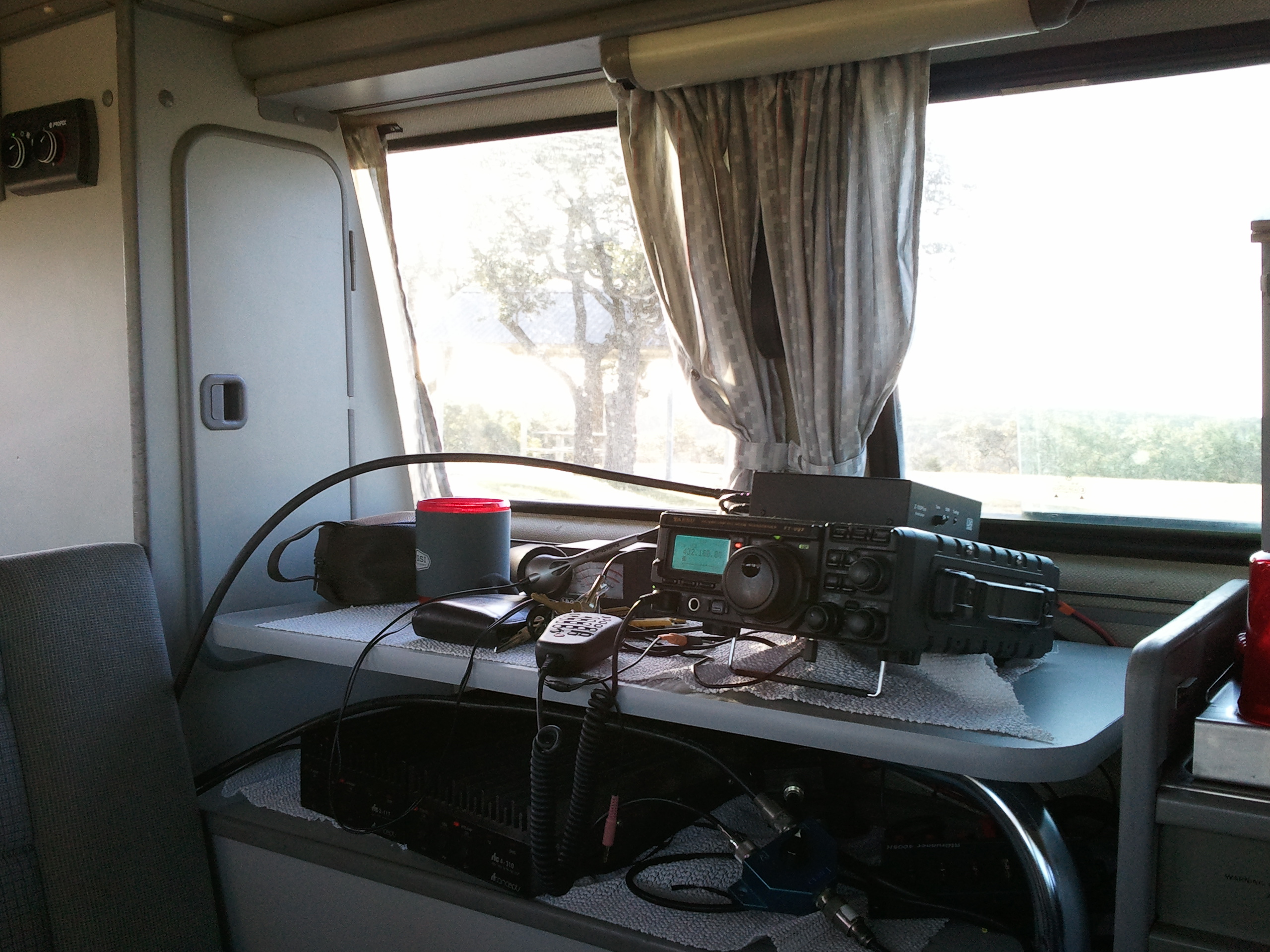
The radio station in the Westie
We started by working from EM10 at the highest point in Austin. From there, we proceeded to EL19 in San Marcos. Along the way, there was an E-skip opening on 6 meters that enabled us to work Arizona with a 102″ whip. As the sun fell, we proceeded to a roadside park near Fischer, TX in grid square EL09 and set up camp for the night. With all the creature comforts of the Westie, including heat, running water, electricity, solar & battery power, we enjoyed an evening cooking lentil soup and venison sausage, followed by a restful night with the top popped up. Kourt, KB5PRZ, gives a more detailed description of the work put into the van on the Samba forum.
As the sun rose, we were treated to a fine panoramic view of the Devil’s Backbone. Morning is a great time to take advantage of tropospheric ducting on VHF bands. With the weather being warmer than usual, the chances were good. With our directional antennas we were able to reach as far as the Louisiana border on two meters and Florida on six meters. Satisfied with the morning’s results, we packed up camp and moved on to grid square EM00 on a high ridge between Blanco and Henly. It was the highest point of our trip. From there we continued to work stations as far as the DFW area, Toledo Bend, and Rocksprings.
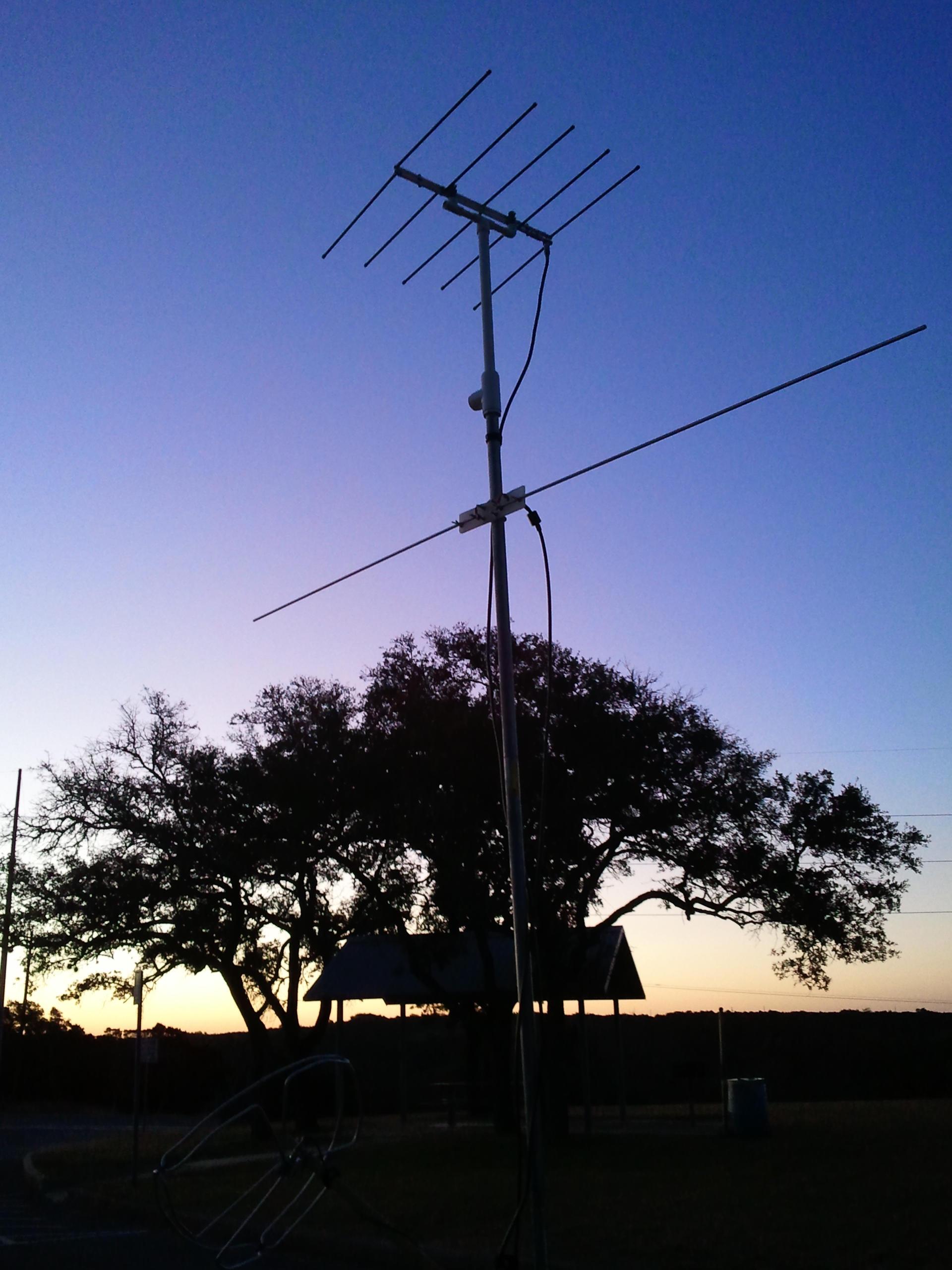
Sunrise at the roadside park, Devil’s Backbone.
Given our budget and a general desire to do more with less, we were pleased with the performance of the station. More importantly, we had a chance to enjoy a beautiful weekend in the country. It wouldn’t matter much if we had no contacts at all; the Westie was a blast to camp in, and Kourt makes the van very much like a tiny home. We were entertained by the many double-takes as passers-by looked, waved, and wondered what we were doing. We look forward to more contests in the future.
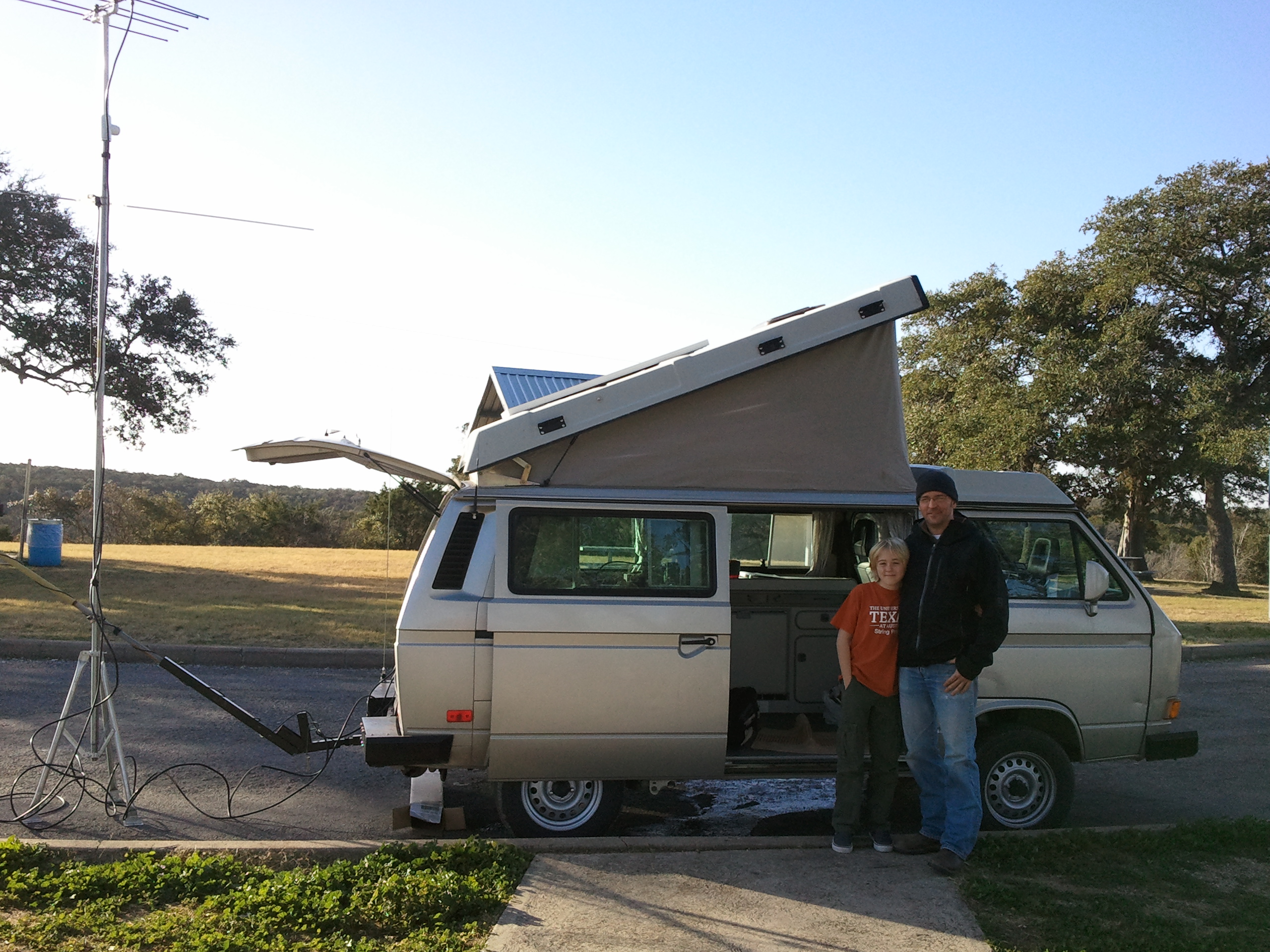
Camper Van Rover
This is a live map of APRS activity, courtesy of aprs.fi:
Listen live to Austin area amateur repeaters and Travis County and Austin police radio. These feeds run 24/7. The amateur radio feed scans through all known operational 6m, 2m, 1.25m, 70cm & 33cm repeaters in Austin, Williamson, Bastrop, and Hays counties in central Texas. The law enforcement feed scans police departments, sheriff and constables for: Austin Police, Travis County, Lakeway, Manor, Pflugerville, Westlake Hills, Rollingwood, Sunset Valley, UT, and Texas DPS.
Here are a few ways to listen to the amateur radio scanner:
– At Broadcastify here. If you use the Scanner Radio mobile app, it’s like having your own pocket scanner.
– With your preferred media player or streaming device, the network stream URL is http://audio1.radioreference.com:80/461054660
– Use the embedded feed on this site below:
The archives for the Austin amateur radio feed can be found here. Recordings are kept for six months.
To listen to the Travis County law enforcement and Austin Police Department scanner feed via Broadcastify, go here. The network stream URL for this feed is http://audio1.radioreference.com:80/907330774 . The same feed is also provided right here:
You can listen to both of these feeds simultaneously on this page.
Here is the “machine” that provides the amateur radio feed:

Raspberry Pi lego scanner contraption
As attested by these onlookers at my backyard station.

Children playing hide and seek pause to inspect my amateur radio station.
In Texas, there are a lot of repeaters. About 1,642 according to what some consider a reliable source. Of those, many are “paper repeaters” in that they exist only in repeater directories. These venerable books remind me of the yellow pages — one must ask, “do they still make those?”
It’s challenging to develop a well-curated file of repeaters. One source that’s made it rather easy is RepeaterBook, by ZMB2 software. They’re doing it right. Of all the repeater directories available, some great qualities set it apart:
– the ability of any account holder to submit changes easily;
– frequency files can be downloaded in CHIRP format for transceiver programming;
– the companion mobile app makes it easy to find repeaters in new areas, even more so if combined with the BlueCAT interface.
The result is that I can personally verify the operation of local repeaters, update the database at RepeaterBook, then run a query to download it into CHIRP. Now in my radio I have all the repeaters that work, and none that don’t. Just as it should be.
The benefits of crowd-sourcing a quality repeater directory only work if we all participate. Please do.